

2026-07-23
OEM Quantum Red-Light Screen Protector Manufacturer: How to Build a Premium Private Label Product
The screen protector market is crowded with products that look similar, use the same 9H hardness language, and compete mainly on price. For distributors, retail chains, e-commerce brands, and private-label accessory companies, that makes it difficult to create a premium product story. Working with an experienced OEM Quantum Dot Red-Light Technology manufacturer offers a different path: combine dependable physical protection with advanced optical materials, custom product specifications, and a brand-ready presentation.
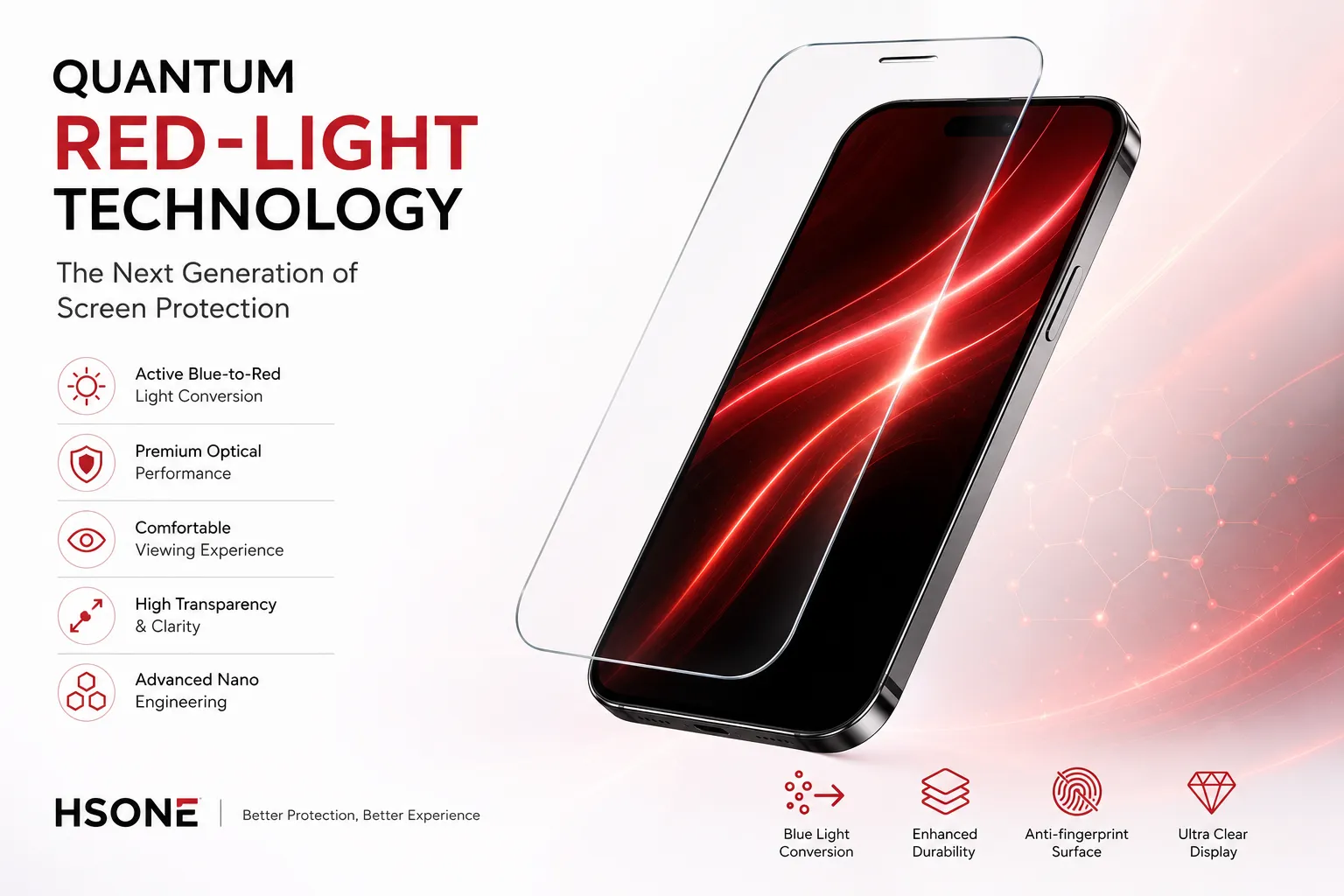
A quantum red-light screen protector is designed to convert part of the higher-energy blue spectrum into a red-spectrum output through a specialized optical layer. The objective is not simply to block light, but to engineer how light passes through the protector while preserving display brightness, color clarity, touch response, and daily usability. For B2B buyers, the commercial value lies in product differentiation, premium positioning, and the ability to build a technology-led screen protection range instead of another generic tempered glass line.
What Is a Quantum Red-Light Screen Protector?
A quantum dot screen protector incorporates nano-scale optical materials into a functional layer within the protector structure. When properly formulated, this layer is designed to absorb a selected portion of incoming blue light and re-emit part of that energy in the red region of the visible spectrum. The exact optical result depends on the material formulation, layer thickness, display type, adhesive system, coating stack, and test method.
Why Brands Are Moving Beyond Standard Tempered Glass
Standard tempered glass remains essential for scratch resistance, impact protection, and display coverage. However, the category has become highly commoditized. A technology-driven OEM tempered glass screen protector can create a clearer reason to choose one brand over another.
Key Product Decisions in an OEM Quantum Red-Light Project
1. Device Coverage and Market Priority: Start with the devices that match your sales channel. A mobile-accessory retailer may prioritize current iPhone and Samsung flagship models.
2. Optical Performance Targets: Define the measurable optical targets before sampling. Relevant items may include visible-light transmission, haze, color shift, reflectance, spectral response, and display readability.
The OEM Development Process: From Brief to Mass Production
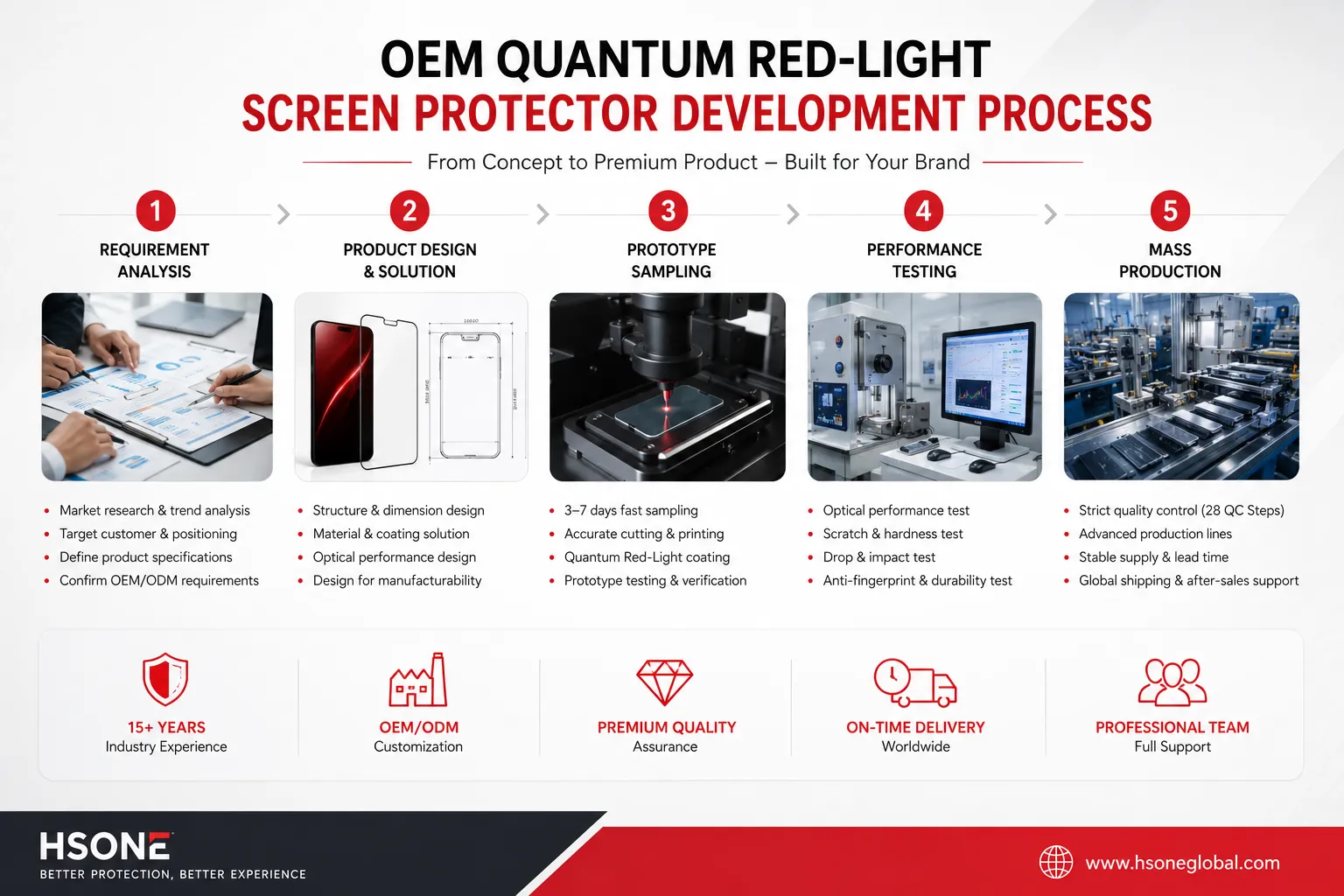
A professional OEM project should follow a controlled sequence. Skipping early technical alignment often creates delays later, especially when the product combines optical materials, device-specific dimensions, and custom packaging. HSONE's OEM / ODM Solutions follow a structured workflow to ensure success.
How to Evaluate a Red Light Screen Protector Factory
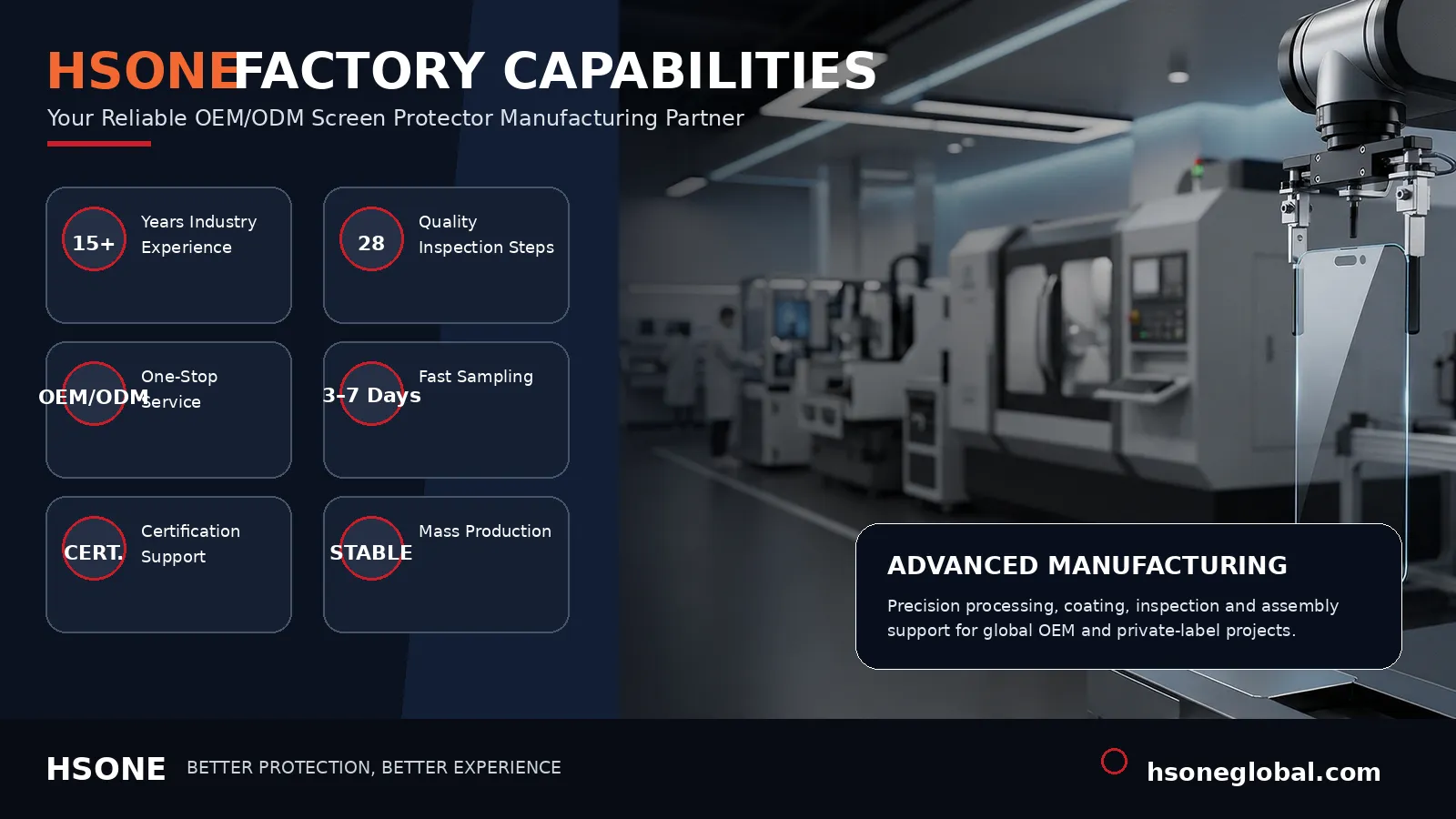
Choosing a red light screen protector factory requires more diligence than buying a standard catalog item. The supplier must be able to control optical consistency as well as mechanical quality. Key factors include technical transparency, repeatable quality control, and production stability.
Private Label Screen Protector Customization Options
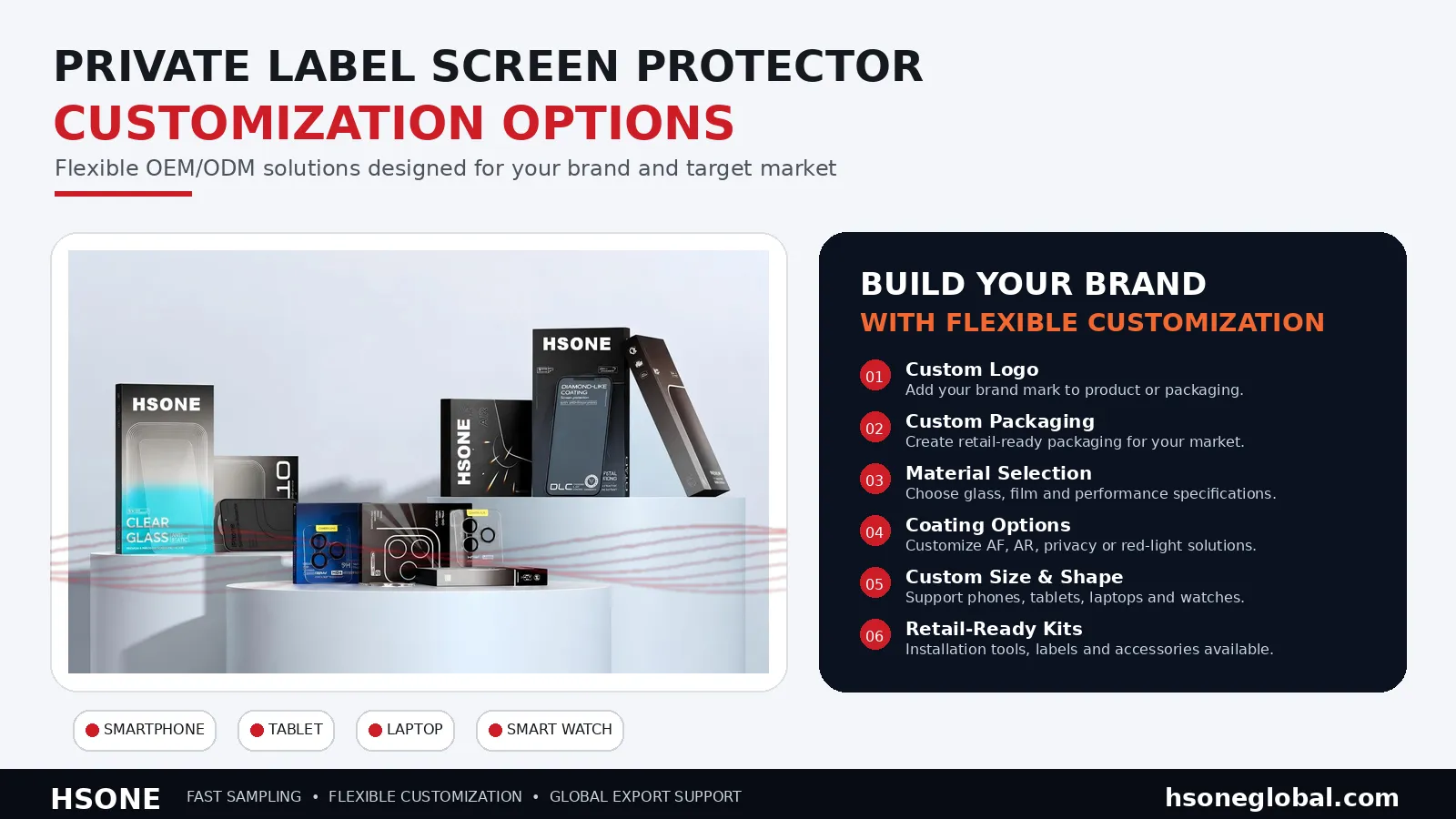
The strongest private-label programs align the technical product with the brand's sales channel. HSONE can develop a complete package rather than supplying unbranded glass only.
Wholesale and Bulk Ordering Considerations
A screen protector wholesale supplier or bulk buyer should evaluate total landed value, not only the factory unit cost. For a first order, it is often practical to launch a focused set of high-volume devices, verify customer response, and then expand the range.
Frequently Asked Questions
Can HSONE make a private label screen protector with custom packaging?
Yes. OEM and ODM services can include custom product specifications, logo application, packaging design, installation tools, labels, barcodes, and shipping-carton requirements.
What information is needed for a quotation?
Provide the device models, target market, expected quantity, packaging style, logo files, optical requirements, and delivery country.
Conclusion
The next stage of screen protection will be defined by more than hardness and impact resistance. Brands that combine durable materials, responsible optical innovation, a smooth installation experience, and professional packaging can create stronger differentiation in a crowded market.